
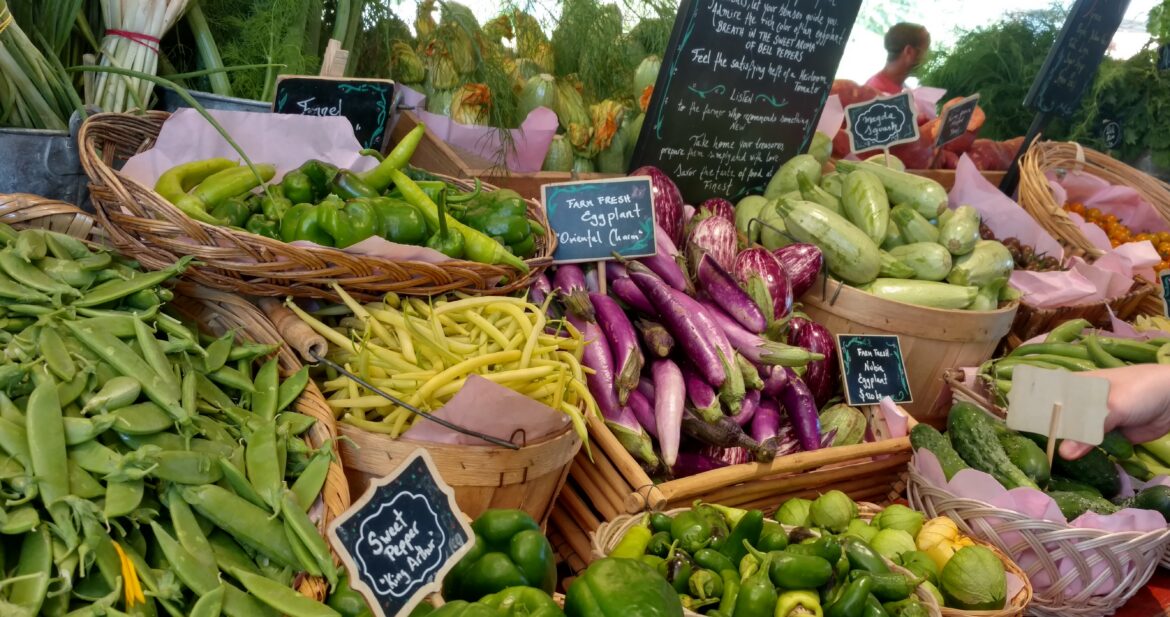
If you’ve been seeing headlines about Cyclospora, you might think it’s a new food safety threat. Cyclospora isn’t new. Every summer, health departments investigate cases of this foodborne parasite.
As of July 13th, 2026, there are 194 reported cases in Illinois alone, according to the Illinois Department of Public Health.
In 2025, Illinois reported 141 cases. {source: Telegraph}. More reported cases don’t always equate to a bigger outbreak. Officials also report that cases often go unreported. So is the rise in cases this year because more people are actually reporting it because it’s blasted on headlines everywhere, making it more known?
More importantly, let’s discuss what this is, where it comes from, and how you can lower your risk.
Cyclospora is a parasite most commonly linked to large-scale production of fresh produce that has been contaminated with human fecal waste. This happens by contaminated irrigation water, poor farmworker sanitation during growing or harvesting (lack of access to toilets or bathroom breaks) and fertilizer. If ingested, it can cause watery diarrhea, stomach cramps, bloating, gas, nausea, fatigue, dehydration, and low-grade fever. This can last 2-4 weeks; you may even feel better for a few days only to find it return.
Scale is the real problem. Most of our produce is grown on industrial farms. One contamination event can quickly become a 17-state outbreak overnight. Government funding cuts ended active surveillance for Cyclospora this year, along with 5 other pathogens. Note: The CDC indeed chose to stop surveilling Cyclospora; the government didn’t mandate it. Due to budget cuts, they had to choose to follow the most dangerous and most problematic bacteria: E.coli and Salmonella.
Let’s talk about the facts.
- You cannot see it; the parasite is microscopic.
- It is NOT spread directly from person to person; you can’t ‘catch it’ from a friend.
- There is no identification of the current source. Notable past offenders have been cilantro, basil, raspberries, blackberries, green onions, and snow peas.
- Rinsing produce does not completely eradicate it.
- Cooking is effective for inactivating the parasite.
- Produce from your own garden is generally safe, provided you use clean irrigation water and practice good hygiene. (Yes… that means no using human waste as fertilizer!)
- Not everyone needs antibiotics.
- Symptoms are going to be worse for someone with a compromised immune system.
My goal isn’t to make you afraid of fresh produce. Fruits and vegetables are still some of the most nutritious foods you can eat. Instead, let this be a reminder to know where your food comes from, support local growers when you can, and handle produce safely at home.
There are ways to lower your risk:
- Buy produce from local farmers you know and trust whenever possible.
- Unfortunately, not everyone has access to or can afford local farmers.
- Rather than avoid produce, look at frozen options. Frozen produce carries a much lower risk than fresh, and most frozen vegetables are also cooked before eating.
- Frozen produce is typically more cost-effective, and there is less waste since you can use only what you need and keep the rest frozen.
- Buy greenhouse-grown as most of the contamination pathways don’t apply the same way indoors.
- Cook vegetables to 158 degrees; it’s the only foolproof way to kill the Cyclospora parasite.
- Eat fruit that you can peel.
- Cut away any damaged or bruised areas.
- Rinse raw produce vigorously under cool, running water. For firm produce like melons, use a clean vegetable brush. While washing may not remove all Cyclospora, it’s still an important food safety habit.
- Note: Soaking veggies in a vinegar-water solution has not been shown to kill Cyclospora.
- Avoid pre-cut, bagged lettuce blends and precut vegetables (unless you plan to cook them).
- Wash your hands. Often.
Choose awareness over anxiety. Your health is built on informed choices, not fear.
2